Unlock Creative Freedom with Junk Journal Folder Templates
There's a unique satisfaction in crafting a junk journal that feels entirely yours. The textures, the layered papers, the unexpected ephemera—it all tells a story. But starting from a completely blank page can be daunting. This is where thoughtfully designed Junk Journal Folder Templates become an invaluable creative partner, offering a structured yet flexible foundation for your personal or commercial projects.
More Than Just a Template: A Foundation for Your Vision
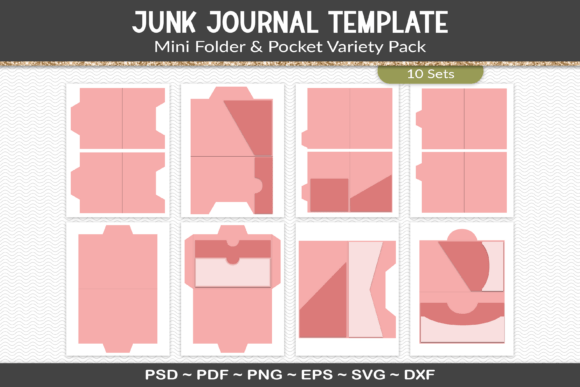
Think of these templates not as rigid molds, but as expertly crafted starting points. They provide the essential framework—pockets, tuck spots, and layered folder structures—that define a functional and beautiful junk journal. The true power lies in their adaptability. You receive the designs in multiple formats, including fully editable PSD, EPS, and SVG files. This means you can deconstruct every element, change colors, alter textures, merge layers, and infuse the template with your own brand's aesthetic or a client's specific vision. The included PDF outline printable offers a quick, no-fuss option for immediate crafting, while the PNG stencil files ensure compatibility with virtually any design application you're comfortable with.
The visual personality of these templates leans towards a balanced, versatile aesthetic. They aren't overly ornate or starkly minimalist; instead, they provide clean, functional layouts with ample negative space. This intentional design acts as a canvas. It allows your chosen papers, vintage photos, and hand-lettered notes to become the focal point. The style supports a wide range of themes, from rustic and vintage to modern and botanical, making the templates a reliable asset in any crafter's toolkit.
Practical Applications: From Personal Project to Professional Product
The real-world value of a premium design asset is measured by its utility. For the hobbyist or content creator, these Junk Journal Folder Templates streamline the process of making personalized gifts, memory-keeping albums, or travel journals. The cutting machine compatible files (SVG, DXF) allow for precise, repeatable cuts, saving hours of manual labor and ensuring professional-looking results every time. You can mix and match folder sizes and styles across a single journal, creating dynamic visual interest and functional variety.
For entrepreneurs, marketers, and small business owners, the applications extend into branding and customer engagement. Imagine creating branded junk journal kits as a unique product for your shop. These templates allow you to design a consistent product line where each element, from the folder structure to the included ephemera, aligns with your brand identity. A blogger could use them to design printable inserts for their audience, adding a tangible, interactive element to their digital content. The ability to edit the files in professional software like Adobe Illustrator or Photoshop means the final output maintains a high level of professionalism and consistency, which is crucial for commercial ventures.
Design Observations and Pairing Suggestions
When working with these templates, consider them as part of a larger design system. Their strength is in structure, so pair them with elements that bring personality. Use a handwritten font for journaling spots to add intimacy, or a clean sans serif font for labels to ensure readability. If you're creating a journal with a vintage theme, layer the folders with scanned textures or aged paper patterns before printing. For a more modern look, use the SVG files to cut folders from solid-colored cardstock and pair them with bold, geometric ephemera.
The key is to view the template as a stepping stone. Don't feel constrained by its original form. Combine a folder from one template with a tuck spot from another. Resize elements to create new pocket dimensions. This "mix and match" philosophy is where true creativity flourishes, transforming a generic template into a unique piece of art or a signature product.
Choosing and Using Your Template Assets Wisely
Before diving in, evaluate the template set against your project's needs. Review all the included styles and formats. Does the folder's shape complement your intended journal size? Are the cutting machine files compatible with your specific model (Cricut, Silhouette, etc.)? Test a single folder template first. Print and assemble it using your intended paper stock to assess the physical result—the fold lines, the pocket depth, the overall sturdiness. This practical test is more valuable than any on-screen preview.
For those planning commercial use, the inclusion of EPS and PSD files is critical. These formats preserve editability and are industry-standard for print and digital design workflows. They allow for seamless integration into larger projects, such as packaging design or editorial layouts. Always ensure you understand the licensing terms, but having these professional formats from the start removes a significant barrier to scaling your creative output.
Ultimately, these Junk Journal Folder Templates are more than just pre-made shapes. They are a catalyst for creativity, a time-saver, and a bridge between a raw idea and a polished, tangible creation. They provide the reliable structure so you can focus your energy on the parts that matter most: the storytelling, the personalization, and the joy of making something by hand.